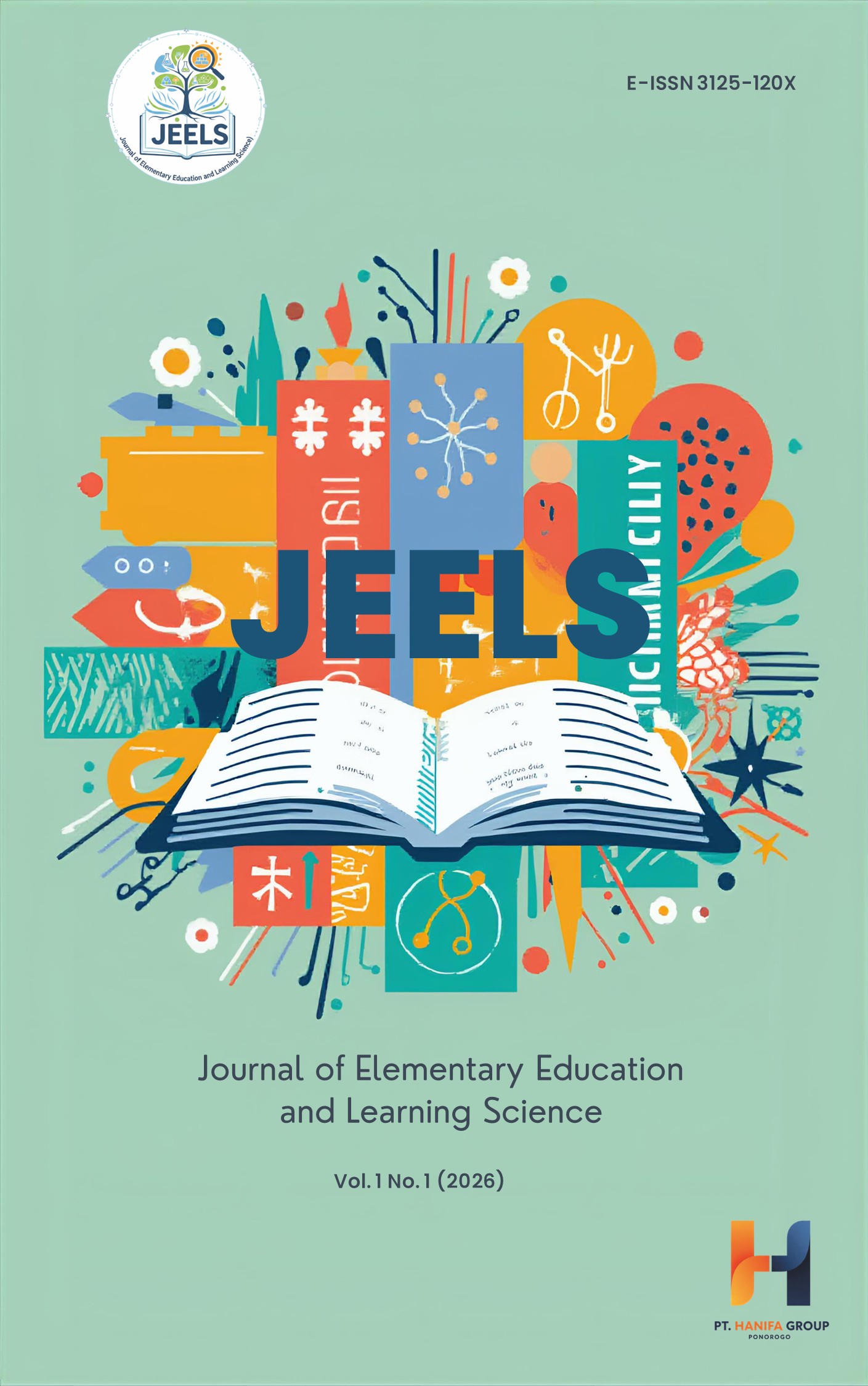
ANALYZING FORMATIVE ASSESSMENT IN CITIZENSHIP GRADUATE PROFILE STRENGTHENING PROJECTS
Keywords:
Formative Assessment, Civic Graduate Profile Strengthening Project, Character Education, Qualitative MethodsAbstract
This study aims to analyze the implementation of formative assessment in the Civic Graduation Profile Strengthening Project (P3LK) to understand its effectiveness in shaping student character. This study uses a descriptive qualitative method conducted at SDN Larangan 2, involving teachers, students, and the principal as key informants. Data collection was carried out through participatory observation, in-depth interviews, and documentation studies. Data validity was tested using source and technique triangulation, while data analysis was carried out through the stages of data reduction, data presentation, and conclusion drawing. The results show that the practice of formative assessment in P3LK is not yet fully optimal due to teachers' lack of understanding of process assessment instruments and constructive feedback. Nevertheless, formative assessment has been proven to increase student engagement in self-reflection related to citizenship values. This study recommends the need for intensive training for educators on various formative assessment strategies and the development of assessment rubrics that are more adaptive to the dynamics of the civic graduate profile strengthening project.
Downloads
Published
Issue
Section
License
Copyright (c) 2025 Journal of Elementary Education and Learning Science

This work is licensed under a Creative Commons Attribution 4.0 International License.
Copyright Notice and Licensed
Authors who publish with this journal agree to the following terms:
- Authors retain copyright and acknowledge that the Journal of Elementary Education and Learning Science
is the first publisher licensed under a Creative Commons Attribution 4.0 International License. - Authors are able to enter into separate, additional contractual arrangements for the non-exclusive distribution of the journal's published version of the work (e.g., post it to an institutional repository or publish it in a book), with an acknowledgment of its initial publication in this journal.
- Authors are permitted and encouraged to post their work online (e.g., in institutional repositories or on their website) prior to and during the submission process, as it can lead to productive exchanges and earlier and greater citation of published work.

Journal of Elementary Education and Learning Science Creativity is licensed under a Creative Commons Attribution 4.0 International License.